
2026/1/28



Ray Chen plays 8 SEASONS
“Japan became an emotional and artistic home for me.”
A heartfelt program note has arrived from Ray Chen ahead of his concert this February.
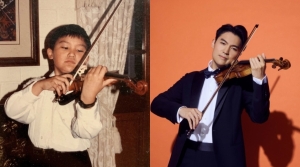
I was eight years old when I first came to Japan.
I had been invited to perform at the Opening Celebration Concert of the 1998 Nagano Winter Olympics, an experience that, even now, feels both distant and vividly close. It was my first time leaving Australia for something as significant as a global event, and more memorably – it was my first time seeing snow.
Until that moment, winter had only existed for me in pictures, imagination, and stories – often in anime, where snow felt poetic, symbolic, and slightly unreal. Standing in Nagano, feeling the cold settle into my hands, watching the landscape soften and quiet under fresh snow, winter suddenly became something physical. Tangible. Real. I didn’t know it yet, but this was the exact point at which I decided quietly, without drama – that music would be my life.
During that trip, my mother and I stayed with a host family in Matsumoto. They were rice farmers, and many of their friends grew fruits and vegetables of different kinds. What I experienced there would today be called “farm-to-table,” but at the time it was simply daily life. It was entirely organic, uncommercialized, and deeply connected to the land. I learned that their way of life was shaped by the seasons themselves. Winter was a time for rest and play, but also for planning and looking ahead to what the next cycle would bring.
Long before I ever experienced seasons in the United States, Japan had already shown me what it meant to live with them.
Growing up in Australia, seasons were simpler, at least in my experience. There was summer, which could be intensely hot and sometimes interrupted by sudden hailstorms, and then a cooler stretch that never quite felt like winter. Nature there is powerful in other ways. It is vast, bright, and home to some of the deadliest and most poisonous creatures in the world, a fact Australians often mention with a mix of pride and humor. But the year did not arrive in clearly marked chapters. Change was gradual and almost continuous. As a child, that felt completely normal.
Japan was where I first experienced seasons as distinct emotional states. I learned how people go out of their way to witness these moments, to walk beneath cherry blossoms, to travel for autumn leaves, and to pause at the first snowfall. Seasons were not simply observed. They were acknowledged, respected, and shared. Spring carried anticipation. Summer brought intensity and release. Autumn invited reflection. Winter asked for stillness. These shifts were not just about weather, but about how time itself was felt.
After that experience, I found myself wanting to return to Japan again and again – not only to perform, but to reconnect with that way of life. In many ways, Japan became an emotional and artistic home for me. I grew up watching tons of anime, absorbing ideas of courage, perseverance, and kindness through stories that were imaginative but deeply human. Later, I found myself especially drawn to anime genres like isekai, stories where someone is suddenly transported into another world. What resonated with me was not the fantasy of escape, but the reflection it required. When everything familiar is stripped away, what remains? What skills, values, and connections truly belong to you? Perhaps that is why those stories stayed with me. They echoed my own experiences of travel, performance, and growth, of carrying what I had learned from one place into another.
Over time, performing in Japan has deeply shaped my relationship with music. I have learned to listen differently here, to value stillness, focus, and restraint. There are moments in a hall when the silence feels so complete that it seems you could hear a pin drop. In those moments, a concert becomes something almost meditative, where we experience something together, something larger than ourselves.
Growing up, I always felt especially comfortable with Summer from Vivaldi’s Four Seasons. Not because it is the most virtuosic or dramatic concerto, but because it felt familiar. I grew up in warmth. Heat was something I understood instinctively. The other seasons asked more of me. Playing them required me to draw more heavily on imagination, to picture harvests I had never seen or winters I had never felt.
At the time, I was already playing The Four Seasons, even before coming to Japan. I had begun learning the piece at the age of seven, and I remember struggling to truly grasp what harvest season might feel like, or what a real wintry landscape would look like. In that sense, my trip to Japan came at exactly the right moment. Experiencing snow, feeling the contrast between seasons, and observing how people lived in harmony with them gave shape and texture to ideas that had previously been abstract.
This idea of familiarity and contrast has stayed with me, and it has shaped how I hear The Four Seasons today.
Vivaldi presents each season as its own world, sharply defined and rich with imagery. Spring bursts open. Summer strains under heat. Autumn dances. Winter retreats into stillness. Piazzolla’s Four Seasons of Buenos Aires, on the other hand, feel more continuous. The seasons are present, but they emerge as different shades of the same city, the same emotional voice viewed through changing light. There is less transformation, and more continuity.
I have always loved how Japan holds the old and the new side by side, taking what comes from elsewhere and reshaping it with care, precision, and respect, while allowing innovation and modern ideas to grow naturally within a deeply traditional culture. In that sense, bringing Vivaldi and Piazzolla together feels natural to me. This concert reflects not only two composers and two musical languages, but also a way of thinking about tradition and reinvention, about honoring what has come before while continuing to move forward.
I come to Japan every year, and yet every concert here feels, in its own way, like a homecoming. This was the place where I first fell in love with the seasons, the people, the culture, the food, and most of all, with the act of sharing music. My hope is that you will not only hear these seasons tonight, but feel the experiences, memories, and quiet acknowledgements woven into them.
Thank you for being part of that journey.
Ray Chen
◆Ray Chen Artist Page
⇒https://www.japanarts.co.jp/en/artist/raychen/
